
The Last of the Computer Graphics Artists
An industry shakes in their collective boots as Meta comes for The Spirit

I work as a freelance digital creator. I’m always curious when a role is sent to me that falls into my skill set. I received an email Sunday, (Nov. 16th, 2025), with a great subject line: Calling all VFX pros—exciting opportunities with a world tech leader. That sounded interesting. Then, the predictable body copy:
“We’re proud to share that Aquent is working with one of the world’s most influential technology and social media companies to help fill a significant number of VFX Artist roles across the U.S. This initiative is part of a major creative program that blends artistry, design, and emerging AI technology.
These roles will shape the future of how people create, share, and experience visual storytelling—and we’d love your help connecting great talent to this opportunity.” (emphasis/italics are mine)
The position described in the email reminded me of a LinkedIn post I had seen over the previous weekend. Mack Williams, a producer and animation director who works with SNL and many others, cleared up what was going on:
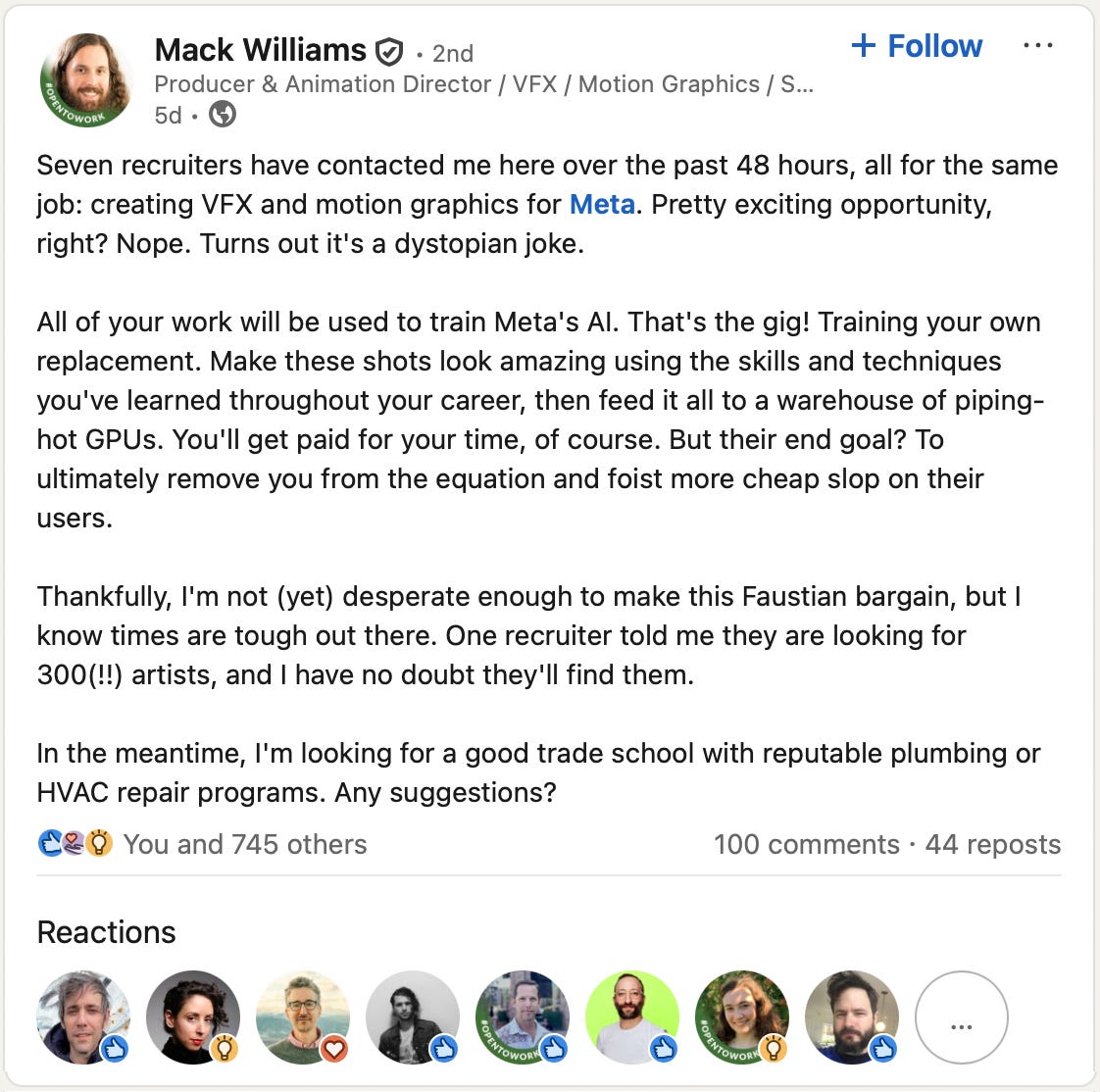
The comments on Mack’s post revealed piles of other freelancers are getting this invite as well.
The current pool of freelance artists has too many underemployed, over-experienced builders who are nervous about their next rent or mortgage payment. A recent report by Henley Wing Chiu showed “creative roles that ‘execute’ are declining…”. The article reported a 33% reduction, from 2024 to 2025, in computer graphics artists roles.
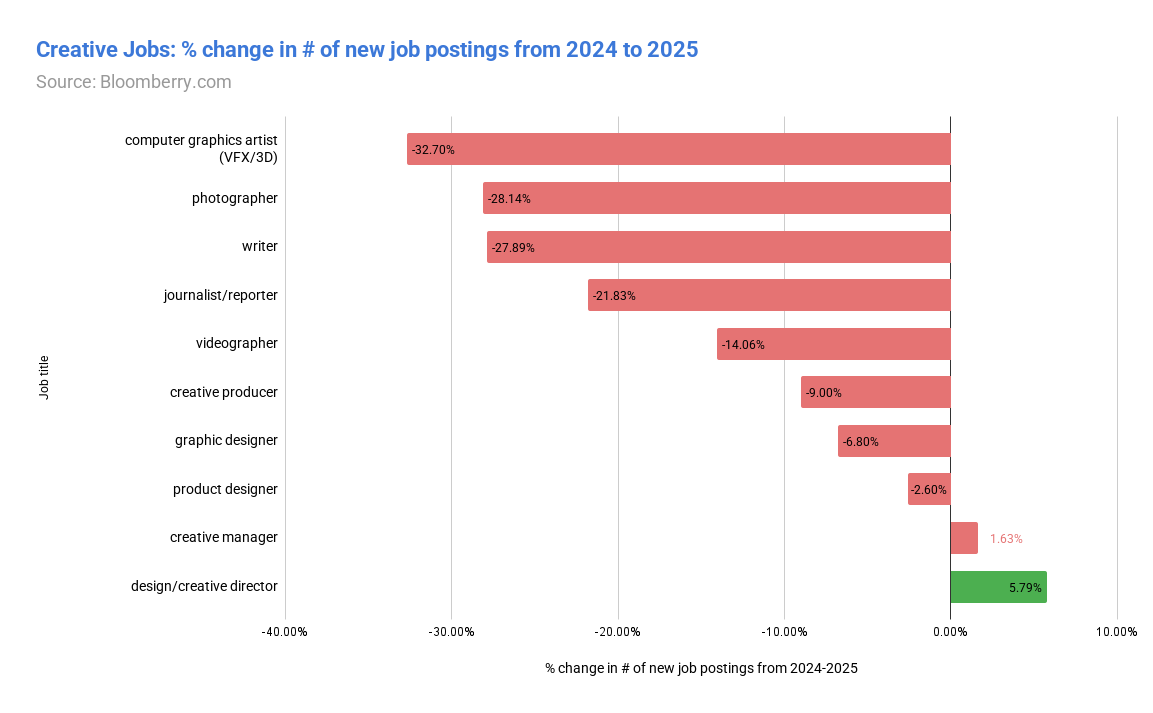
Computer graphics artists are the target of this hiring barrage. Meta, along with so many other behemoths, is in a race to replace the builders with a subscription to a model.
This hiring explosion is blatant and aggressive. It might make creative workers wonder - could it be that people who don’t enjoy making things, like art, feel off about people that do? Turns out, a study shows creativity can make some people think about vomit.
According to “The bias against creativity: why people desire but reject creative ideas”, (Jennifer S Mueller, Shimul Melwani, Jack A Goncalo) people want to enjoy creativity, but struggle to. This is because when people experience uncertainty, which new ideas can trigger, they unconsciously associate creativity with negative terms like vomit, agony and poison. This happens even though people believe innovative thinking is important to them. This hidden bias makes people less able to recognize and accept actual creative ideas.
So can we assume creative people are unpleasant to many people, as ‘creatives’ are agents of uncertainty? This would make this mission easier for the model makers, who have taken a swing at a sizable number of computer graphics artists in this phase of the AI transition.
Maybe that’s not the problem. According to Chiu’s report, creative direction roles have actually grown, while strategy leadership roles have held steady. I decided to ask a computer graphics artist that Meta would likely love to work with if he could provide any insights from the artist’s perspective.
My friend Dan Meth, a freelance animator, illustrator, video director, writer and viral video pioneer, has been here before. “In 1999 I had the same feelings about Adobe Photoshop and Flash - all these computer tools that make animations and images. I was against new tech back then, right? I’m a very traditionalist artist by nature. And then, of course, I get over that, and I spend the next 30 years doing computer animation.”
He sees this new job opportunity through a lens of potential inevitability. “I would hope I don’t have to take one of those jobs, right? Because it might be your last job. It’s like, finish up training this robot so you’ll never be needed again. I’m not for any of it, but it seems like we’re just victims trying to survive in an era in which you have to. If you want to make any money, you’ll have to give in to this new technology”.
“Ultimately, it (AI content) just looks soulless. And that’s the word that we’re always using for AI stuff … it doesn’t have The Spirit, you know?” — Dan Meth
According to a Reddit thread on r/VFX, a great steamrolling over the freelance talent community is underway. User universalaxolotl says Meta is trying to fill 1,000 of these positions. According to this thread, the hourly rate estimates are said to be declining (from $100/hr initial offers down to $60/hr) and the contract lengths are rumored to have been halved (from 6-month stints to 3-month stints). The scale is brutal, and the VFX community is searching for its footing.
Maybe there’s some hope we can find. The lack of playful ebullience or genuine joy in the work these new creative AI tools create might continue to alienate even more people. This could fuel a return to that human spark, the same energy that drove Photoshop’s creators, brothers John and Thomas Knoll, to create the program in the first place.
Unfortunately, hope isn’t likely to solve the potential futures we’re facing. Maybe people will embrace the output from Meta’s impending computer graphic artist model because it’s safe and derivative. There’s no uncertainty, no discomfort, which is exactly what that creativity study predicted they wanted. Or maybe people will reject the sameness of AI-generated work.
People are proposing solutions to help workers if AI content is fully embraced, but they aren’t scalable. There won’t be half a million new director-level computer graphics artist roles in the near future. An entire industry pivoting doesn’t seem possible. And suggesting creative workers make more distinctive and original work contradicts people’s hidden bias against novel ideas.
These bleak potential outcomes crumble if people revolt against sameness. But revolutions aren’t scheduled, or likely.
Until a revolution arrives, computer graphics artists, photographers, journalists, writers, and more will need to feed The Spirit. And pay the rent.